

At a Glance
Lasting oral health comes from consistent daily habits, not occasional perfect effort. This guide gives families a practical, age-by-age plan for brushing, flossing, and making routines stick, from the first baby tooth through the teen years.
Most parents already know the basics: brush twice a day, floss, see the dentist. The hard part is getting the whole family to do it consistently, every day, without a nightly standoff. Habits form through repetition, not willpower, so the goal is to build routines your household can follow on autopilot. For families across Surrey and nearby communities, that steady approach does more for long-term dental health than any single product or deep clean ever will.
What Does a Solid Daily Dental Hygiene Routine Look Like?
A strong routine has a predictable shape: brush in the morning, brush again before bed, and floss once a day. Simple structure beats complicated rules.
The American Dental Association recommends brushing twice daily for two minutes each time, using a soft-bristle brush and fluoride toothpaste. Two minutes is longer than most people think. A helpful way to picture it is roughly 30 seconds per quadrant, or about four seconds per tooth. A timer or a two-minute song keeps everyone honest.
Flossing earns its place because a brush cannot reach between teeth where they touch. One thorough session a day is the standard. The order does not matter much: the ADA says flossing before or after brushing is both fine, so pick whichever your family will actually do. Many households find evening flossing easiest, clearing the day’s debris before the final brush.
Consistency is the whole point. A routine done imperfectly every night protects teeth far better than a flawless cleaning three times a week.
How Do Hygiene Habits Change as Kids Grow?
What a routine looks like depends heavily on age. Dexterity, cooperation, and the amount of toothpaste all shift over time, so expectations should shift with them.
Babies and toddlers (first tooth to age 3). Start cleaning as soon as the first tooth appears. Before teeth, wiping the gums with a soft, damp cloth helps. Once a tooth erupts, brush twice a day with a smear of fluoride toothpaste about the size of a grain of rice. Supervise closely so little ones learn to spit, not swallow.
Ages 3 to 6. Move up to a pea-sized amount of fluoride toothpaste. Kids this age love to “do it themselves,” which is great for motivation but not yet for thoroughness. Let them have a turn, then follow up with a parent pass. This is also when flossing matters: the ADA suggests flossing as soon as two teeth touch, often around age 2 to 3, with a parent doing the work at first.
Ages 7 to 12. Most children can brush on their own now, but their technique still has gaps. Spot-check a few times a week, especially the back molars and gumline. Floss picks are easier for small hands than string. Children typically need help with flossing until about age 10 or 11, when their dexterity catches up.
Teens. The goal here is ownership. Teens should run their own routine, with parents stepping back to gentle reminders. If your teen plays sports, a custom mouthguard is worth the conversation, since a good guard protects teeth during contact play. For the care side of each stage, our pediatric dental care page explains how checkups support kids as they grow.
How Can Parents Make Habits Stick?
Knowing the routine is easy. Making it automatic is where families struggle. A few behavioral tricks do most of the heavy lifting.
Stack the habit onto something that already happens. Habits anchor best when tied to an existing routine. Brush right after breakfast and right before the bedtime story, every day, same order. The existing event becomes the reminder.
Make the cue visible. A toothbrush timer, a two-minute playlist, or a simple chart on the bathroom mirror turns an abstract goal into a concrete signal. Young kids respond well to a sticker chart they can fill in themselves.
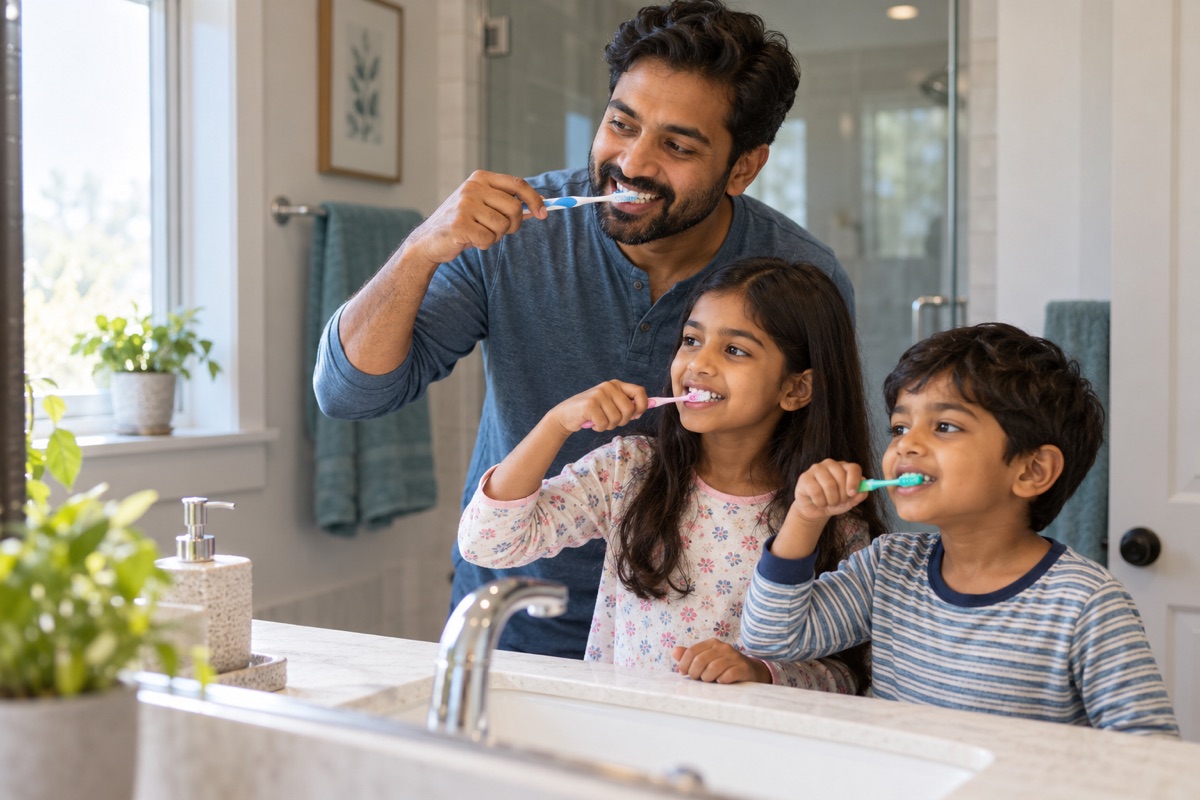
Brush together. Children copy what they see. When a parent brushes alongside them, brushing stops being a chore imposed from above and becomes something the family just does. It also lets you model good technique without lecturing.
Lead with encouragement, not nagging. Positive reinforcement outlasts pressure. Praise the effort, keep the tone light, and let kids make small choices: which toothbrush color, which song, who goes first. A little control reduces resistance at the sink.
Home habits and professional care reinforce each other. Cleanings and exams every six months catch small issues early and keep the whole family’s routine on track. You can read more on our preventive care page about how regular visits fit alongside daily habits.
Quick FAQ
Q: When should my child start flossing?
A: As soon as two teeth touch, which is often around age 2 to 3. At that stage, brushing alone cannot clean the contact points between teeth. Parents should do the flossing at first, since most children need help until roughly age 10 or 11, when they have the hand control to do it well on their own.
Q: Are electric toothbrushes better for kids?
A: The evidence generally favors electric toothbrushes for plaque removal, and some studies show better gum-health results too. The advantage is real but usually modest, and it depends on the child using the brush correctly and for the full two minutes. Electric brushes can help most for kids who tend to rush or struggle with technique. A manual brush used well still works fine. Supervision matters regardless of the type.
Q: How do I know if our family’s routine is actually working?
A: Watch for the everyday signs: gums that do not bleed when brushing or flossing, fresh breath, and no new sensitivity or pain. The clearest confirmation comes from regular checkups, where your dentist can spot early changes you cannot see at home. If you are looking for a dentist in Surrey, our team is happy to review your family’s routine and flag anything worth adjusting.
Book a Family Hygiene Visit
Daily habits do the steady work, and regular professional cleanings keep them on track. Panorama Place Dental Centre serves families across Surrey and nearby communities, and we are glad to help you build routines everyone can stick with. Schedule your exam for the whole family, or contact our office with any questions about getting started.